
What Is Custom Website Design and Why It Matters
- Ekaterina WebcityX

- Feb 15
- 7 min read

Struggling to stand out in a crowded online market often starts with your website’s first impression. For businesses in Hungary and worldwide, the difference between blending in and attracting loyal customers often lies in a truly unique digital presence. Custom website design offers a tailored approach that gives your brand distinct identity, superior SEO potential, and a responsive user experience that template sites cannot match. Discover how modern, strategic web design for your Wix platform can transform your brand’s visibility and credibility.
Table of Contents
Key Takeaways
Point | Details |
Custom Website Design | This approach creates tailored digital ecosystems, enhancing brand identity and user experience beyond template solutions. |
Differentiation from Templates | Custom designs offer unique flexibility, brand expression, and advanced functionality that templates often lack. |
Investment and ROI | Consider initial and ongoing costs carefully, as custom websites can generate significant long-term value through increased engagement and credibility. |
Strategic Selection | Evaluate your business needs to determine if custom design is necessary, specifically for complex functionality and brand differentiation aspirations. |
Defining Custom Website Design and Core Concepts
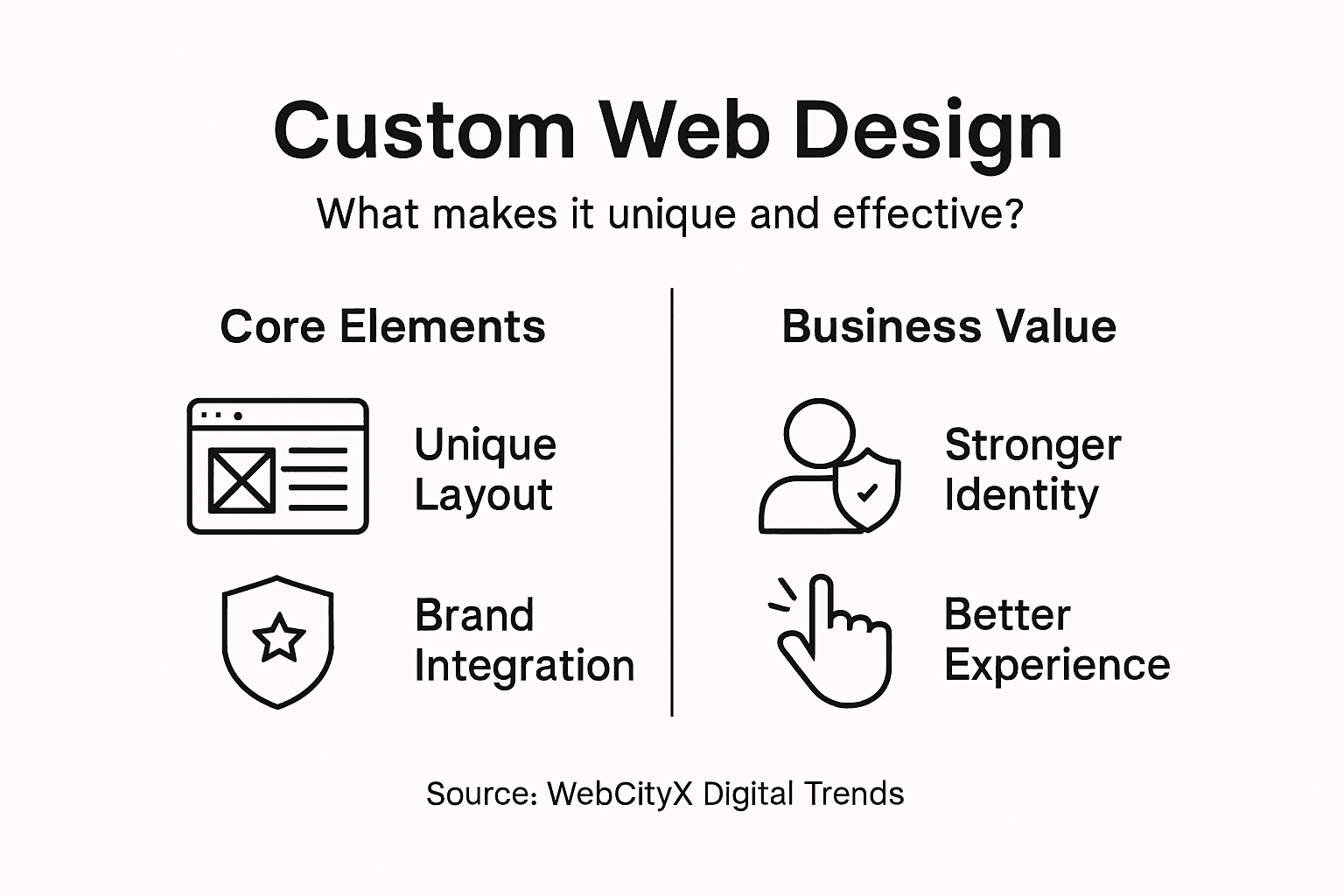
Custom website design represents a strategic approach to digital presence that goes beyond standard template-based solutions. Unlike generic website builders that offer one-size-fits-all frameworks, custom website design creates a unique digital ecosystem tailored precisely to a business’s specific needs, brand identity, and target audience.
At its core, custom website design involves crafting a digital platform from scratch that reflects a company’s unique personality, strategic goals, and user experience requirements. Web design experts understand that every pixel matters - from color schemes and typography to navigation structures and interactive elements. The design process integrates multiple critical components:
Visual Identity: Creating a cohesive look that represents brand values
User Experience (UX): Developing intuitive navigation and interaction paths
Responsive Architecture: Ensuring seamless performance across devices
Performance Optimization: Maximizing loading speeds and technical efficiency
Designing a custom website means moving beyond pre-existing templates to develop a digital platform that functions as a strategic business asset. This approach allows businesses to differentiate themselves in crowded digital marketplaces by offering unique visual and functional experiences that resonate directly with their target audience.
Pro tip: Invest time in understanding your brand’s unique digital personality before beginning the custom design process to ensure your website truly represents your business vision.
Custom Website Design vs. Templates: Key Differences
Custom website design and template-based solutions represent dramatically different approaches to digital presence. Website design strategies reveal fundamental differences that can significantly impact a business’s online effectiveness and brand perception.
Templates offer quick, cost-effective solutions with pre-designed layouts that can be rapidly deployed. However, they come with substantial limitations:
Limited Customization: Restricted design flexibility
Generic Appearance: Reduced brand uniqueness
Performance Constraints: Potential technical inefficiencies
SEO Challenges: Standardized structures that limit optimization
In contrast, custom website design provides a comprehensive solution that aligns precisely with a business’s strategic objectives. This approach allows for:
Unique Brand Expression: Fully tailored visual identity
Optimized User Experience: Designed specifically for target audience
Advanced Functionality: Custom features and integrations
Scalable Architecture: Flexible design that grows with the business
Businesses must recognize that their website is often the first interaction potential customers have with their brand. Design choices can dramatically influence perception, credibility, and ultimately, conversion rates.

Pro tip: Evaluate your business goals, budget, and long-term digital strategy before deciding between custom design and template solutions.
Here’s a direct comparison of custom website design and template-based solutions:
Criteria | Custom Website Design | Template-Based Solution |
Design Flexibility | Unlimited, fully personalized | Restricted, limited choices |
Brand Differentiation | Unique visual identity | Generic, widely used style |
Long-Term Scalability | Adapts to growth easily | Limited by template structure |
Upfront Investment | Higher initial cost | Lower startup cost |
Competitive Advantage | Strong, tailored appeal | Reduced impact in crowded markets |
This summary clarifies the business implications of choosing each approach.
Key Features of Modern Custom Websites
Modern custom websites have evolved far beyond simple online brochures, transforming into sophisticated digital platforms that drive business growth. Advanced website technologies are now fundamental to creating powerful online experiences that engage and convert visitors.
The core features of contemporary custom websites encompass several critical elements:
Responsive Design: Seamless performance across all devices
User-Centric Navigation: Intuitive interaction paths
Performance Optimization: Lightning-fast loading speeds
Dynamic Content Management: Easy updates and scalability
Advanced Security Protocols: Protection against digital threats
Technological integration plays a pivotal role in modern custom website design. Businesses now expect websites that not only look exceptional but also function as intelligent marketing tools. This means incorporating:
AI-Powered Analytics: Real-time user behavior tracking
Personalization Engines: Customized user experiences
Integrated Marketing Tools: Seamless conversion optimization
Multichannel Communication: Unified customer interaction platforms
Beyond technical capabilities, modern custom websites must tell a compelling brand story. They serve as digital ambassadors, communicating a company’s values, personality, and unique value proposition through every visual and interactive element.
Pro tip: Prioritize user experience and performance metrics when designing your custom website to create a truly engaging digital platform.
To help you assess the value of modern custom website features, here’s a summary table:
Feature | Business Impact | Practical Example |
Responsive Design | Increases user retention | Site adapts to smartphones |
Dynamic Content | Drives engagement | News updates, personalized offers |
AI Analytics | Informs strategy decisions | Tracks visitor behavior in real time |
Advanced Security | Protects customer trust | SSL, malware detection systems |
This overview highlights how each feature supports digital growth.
Step-by-Step Custom Design Process
Creating a custom website requires a strategic, methodical approach that transforms initial concepts into fully functional digital experiences. Web design fundamentals provide a comprehensive framework for navigating this complex process.
The custom website design journey typically follows these critical stages:
Discovery and Research
Analyze client business goals
Identify target audience characteristics
Evaluate competitive landscape
Define project scope and objectives
Strategy and Planning
Develop comprehensive site architecture
Create user personas
Outline content strategy
Design preliminary wireframes
Design Development
Craft visual brand identity
Design responsive page layouts
Select color palettes and typography
Create interactive prototype
Technical Implementation
Build responsive HTML/CSS structure
Integrate backend functionality
Implement content management systems
Develop custom interactive elements
Each stage of the custom website design process requires meticulous attention to detail and a deep understanding of technical and creative requirements. Professional designers seamlessly blend aesthetic considerations with functional performance, ensuring the final product meets both visual and technical standards.
Technical execution demands comprehensive testing across multiple devices and platforms. Designers must validate:
Cross-browser compatibility
Mobile responsiveness
Loading performance
User interaction flows
Security protocols
Pro tip: Maintain open communication with clients throughout the design process to ensure the final website precisely matches their vision and business objectives.
Costs, ROI, and Common Pitfalls
Investing in a custom website involves complex financial considerations that extend far beyond initial development costs. Website development expenses can range dramatically, from modest DIY solutions to sophisticated professional builds costing up to $150,000.
Custom website investments typically break down into several critical cost categories:
Initial Design and Development
Professional design services
Custom programming
Interactive feature implementation
Backend system integration
Ongoing Maintenance Expenses
Monthly hosting fees
Security updates
Performance optimization
Content management
Technical support
The return on investment (ROI) for custom websites extends beyond mere monetary metrics. Successful digital platforms generate value through:
Enhanced brand credibility
Improved customer engagement
Increased conversion rates
Better search engine visibility
Streamlined business operations
Businesses must be vigilant about potential pitfalls that can undermine their digital investment. Common mistakes include:
Underestimating maintenance costs
Neglecting ongoing SEO optimization
Failing to plan for future scalability
Overlooking mobile responsiveness
Ignoring user experience design principles
Pro tip: Budget approximately 20% of your initial website development cost for annual maintenance and continuous improvement to ensure long-term digital effectiveness.
When to Choose Custom Design for Your Brand
Deciding between a template and custom website design requires strategic evaluation of your business’s unique digital requirements. Strategic website choices can fundamentally transform a company’s online presence and market positioning.
Custom design becomes essential when your business exhibits these critical characteristics:
Complex Functionality Needs
Unique interactive features
Advanced user experience requirements
Specialized industry-specific tools
Integrated custom backend systems
Brand Differentiation Goals
Distinctive visual identity
Nonstandard design aesthetic
Unique storytelling approach
Precise brand messaging alignment
Companies should strongly consider custom design when facing specific strategic challenges:
Requiring complete design control
Needing performance beyond template capabilities
Targeting niche or sophisticated market segments
Developing complex user interaction models
Prioritizing long-term digital strategy
The decision ultimately hinges on understanding that a website is more than a digital brochure - it’s a strategic business tool that communicates brand essence, drives engagement, and supports critical business objectives.
Pro tip: Conduct a comprehensive digital audit of your current online presence to identify specific customization requirements before investing in a custom website design.
Elevate Your Brand with Custom Website Design Tailored for Your Business Needs
Struggling to stand out with generic templates that limit your brand’s potential? The article highlights the crucial need for custom website design that reflects your unique identity and strategic goals while ensuring optimal user experience and scalable functionality. At WebCityX, we understand these challenges and specialize in creating modern responsive websites optimized for Wix and Wix Studio, designed to boost your presence in Hungary and across the globe.

Take control of your digital future today by partnering with WebCityX. Experience a bespoke website crafted to express your brand’s personality, enhance SEO, and guarantee technical support that grows with your business. Don’t settle for less when your online platform can be your strongest asset. Visit us now at https://webcityx.com and discover how our custom web design solutions turn your vision into a powerful digital reality.
Frequently Asked Questions
What is custom website design?
Custom website design is a tailored approach to creating a unique digital platform that reflects a business’s brand identity, strategic goals, and user experience requirements, in contrast to generic template-based solutions.
How does custom website design differ from template-based solutions?
Custom website design offers unlimited design flexibility and a unique brand expression, while template-based solutions have limited customization, a generic appearance, and potential technical inefficiencies.
What are the key benefits of investing in custom website design?
Key benefits of custom website design include enhanced brand credibility, improved user experience, increased conversion rates, optimized performance, and the ability to create advanced, tailored functionality that meets specific business needs.
When should a business consider opting for custom website design?
A business should consider custom website design when it requires complex functionality, aims for brand differentiation, or needs complete design control, especially when targeting niche markets or developing intricate user interactions.
Recommended

Comments