_edited.png)
Role of Website in Branding for Small Businesses

Updated: Jan 29

Struggling to stand out in a crowded market is a familiar challenge for small businesses in Hungary. Your website does more than host information. It shapes customer perceptions, builds trust, and can form lasting connections. By focusing on website branding with Wix, you unlock a distinct digital presence that communicates your company’s values and personality, helping your business carve out a recognizable identity that attracts loyal customers and sets you apart from competitors.
Table of Contents
Key Takeaways
Point | Details |
Website as Branding Tool | A website is essential for conveying brand identity and professionalism, creating a memorable customer experience. |
Visual and Messaging Consistency | Consistent use of logos, colors, and communication style strengthens brand recognition and builds trust. |
Importance of SEO | Effective SEO strategies enhance visibility and connect effectively with potential customers through targeted content. |
Integrated Branding Approach | Comprehensive branding across all touchpoints ensures a cohesive narrative that distinguishes the business in the market. |
Defining the Role of Website in Branding
A website represents far more than a digital business card for small businesses. It serves as a powerful platform for communicating brand identity, establishing credibility, and creating meaningful connections with potential customers. Website branding involves strategically crafting a distinct digital presence that communicates a company’s core values, personality, and unique selling propositions.
Small businesses can leverage their website as a comprehensive storytelling tool that goes beyond basic information. By carefully designing visual elements like color schemes, typography, and imagery, companies create a cohesive narrative that resonates with their target audience. These design choices signal professionalism, build trust, and differentiate the brand from competitors. Consistent branding across website elements helps potential customers quickly understand what makes the business unique and memorable.
The website acts as a multifunctional brand ambassador, working continuously to shape perceptions and generate interest. It provides an opportunity to showcase the company’s expertise, highlight customer testimonials, and demonstrate the value proposition in a dynamic, interactive format. Whether through compelling visuals, engaging content, or intuitive user experience, the website becomes a critical touchpoint that can convert casual visitors into loyal customers.
Pro tip: Invest time in creating a website design that authentically reflects your brand’s personality and speaks directly to your ideal customer’s needs and aspirations.
Key Elements That Shape Brand Identity Online
Digital branding requires a strategic approach to building a cohesive and memorable online presence. Brand identity encompasses both tangible and intangible elements that communicate a company’s essence, values, and unique positioning in the marketplace. These elements work together to create a compelling narrative that distinguishes a business from its competitors.
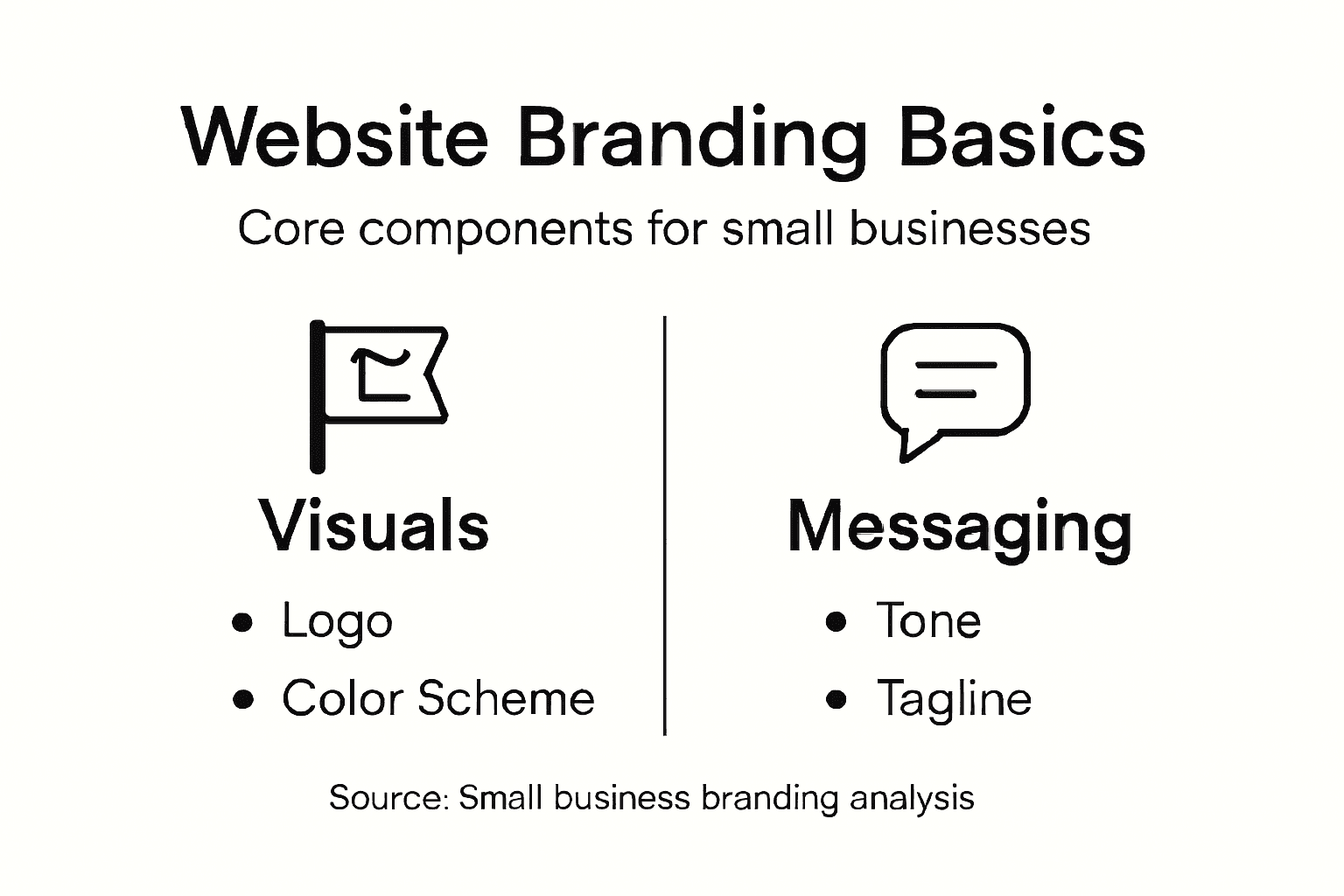
Visual components play a critical role in establishing online brand identity. Logo design, color palette, and typography form the foundational visual language that communicates a brand’s personality. Each design choice sends a subtle message about the company’s character - whether professional and corporate, creative and innovative, or warm and approachable. Consistency across these visual elements helps build recognition and reinforces brand recall among potential customers.

Beyond visual aesthetics, brand identity is deeply rooted in messaging and communication style. The tone of voice, the language used in website content, social media posts, and marketing materials all contribute to creating a distinctive brand personality. Successful small businesses craft a communication strategy that resonates with their target audience, using strategic brand positioning techniques to establish emotional connections and build trust.
Pro tip: Create a comprehensive brand style guide that documents your visual and communication standards to ensure consistent representation across all digital platforms.
Here’s how key website branding elements contribute to small business success:
Branding Element | Purpose | Impact on Business |
Logo Design | Visual brand recognition | Increases memorability |
Color Palette | Conveys brand personality | Creates emotional resonance |
Typography | Sets tone and professionalism | Enhances content readability |
Messaging Style | Defines communication approach | Builds audience trust |
Consistency | Maintains unified look and feel | Strengthens brand recall |
How Web Design and Wix Features Impact Branding
Web design platforms like Wix have revolutionized how small businesses approach digital branding, offering powerful tools that transform complex design challenges into accessible solutions. Wix simplifies website development without requiring programming knowledge, enabling entrepreneurs to create professional, branded online experiences with remarkable ease.
The platform’s design features directly contribute to brand storytelling through customizable elements. Templates, color schemes, and layout options provide small businesses with sophisticated design capabilities that were previously available only to large companies with extensive design budgets. Each design choice becomes an opportunity to communicate brand personality - from minimalist and modern to vibrant and creative. Advanced features like product galleries, responsive design, and integrated SEO tools allow businesses to showcase their unique value proposition effectively.
Beyond visual aesthetics, Wix’s technical capabilities play a crucial role in brand positioning. The platform’s built-in analytics, marketing integrations, and mobile optimization ensure that a company’s digital presence remains dynamic and competitive. By providing intuitive tools for creating engaging user experiences, Wix empowers small businesses to develop websites that not only look professional but also effectively communicate their brand’s core message and values.
Pro tip: Experiment with multiple Wix templates and customize them extensively to find a design that authentically represents your brand’s unique personality and resonates with your target audience.
SEO Strategies for Strengthening Brand Presence
Building a robust online brand presence requires more than just creating a website. SEO plays a critical role in enhancing brand visibility by strategically positioning a business in digital search landscapes. Small businesses must understand that search engine optimization is not just about ranking higher, but about creating a meaningful connection with potential customers through targeted, relevant content.
Keyword strategy forms the backbone of effective brand SEO. Targeted keywords, local search optimization, and content relevance work together to communicate a brand’s unique value proposition. By carefully selecting and integrating keywords that reflect the business’s core offerings, small businesses can attract their ideal customer demographic. This approach goes beyond generic search terms, focusing instead on specific phrases that demonstrate deep understanding of customer needs and market dynamics.
Technical SEO elements are equally crucial in strengthening brand presence. Website performance metrics like loading speed, mobile responsiveness, and user experience directly impact search rankings and brand perception. Ongoing data analytics help businesses adapt to changing consumer behavior, ensuring that SEO strategies remain dynamic and effective. Consistent monitoring and strategic adjustments allow small businesses to maintain a competitive digital footprint that grows alongside their brand.
Pro tip: Create a quarterly SEO audit plan that reviews keyword performance, website technical health, and content alignment to continuously refine your digital brand strategy.
Common Branding Mistakes Small Businesses Make
Small businesses often struggle with branding due to common missteps that can significantly undermine their market positioning. Branding errors range from poor design choices to strategic misalignments that erode customer trust and dilute brand recognition. Understanding these pitfalls is crucial for developing a compelling and consistent brand identity that resonates with target audiences.
One of the most prevalent mistakes is inconsistent brand messaging across different platforms. Many small businesses fail to maintain a cohesive visual and communication strategy, creating a fragmented brand experience that confuses potential customers. This inconsistency manifests in mismatched logo usage, varying color schemes, and tone of voice that changes dramatically between website, social media, and marketing materials. Such disconnects signal a lack of professional sophistication and can make a business appear untrustworthy or unfocused.
Another critical error is neglecting target audience research and brand evolution. Small businesses often develop a brand identity in isolation, without deeply understanding their customers’ needs, preferences, and pain points. This approach leads to generic branding that fails to create emotional connections or differentiate the business from competitors. Successful branding requires continuous learning, adaptation, and a willingness to refine the brand strategy based on customer feedback and changing market dynamics.
Pro tip: Conduct a comprehensive brand audit every six months, comparing your current brand representation against your original brand strategy and customer expectations to ensure ongoing relevance and alignment.
Comparing Standalone Branding to Integrated Website Branding
Branding strategies have evolved dramatically, moving beyond traditional marketing approaches to more holistic, interconnected methods. Integrated branding combines market research, strategy, and creative elements to create a comprehensive brand experience that resonates across all customer touchpoints. Unlike standalone branding, which often focuses narrowly on advertising and visual communication, integrated branding embeds the brand’s essence into every aspect of business operations.
The key difference lies in brand consistency and depth of engagement. Standalone branding typically treats marketing as a separate function, creating disjointed experiences across different platforms. In contrast, integrated website branding transforms the website into a dynamic brand ecosystem. Every element - from visual design and content to user experience and functionality - becomes an opportunity to communicate the brand’s unique personality, values, and value proposition. Business-to-business marketing particularly benefits from integrated branding strategies that create a cohesive narrative across digital and physical interactions.
Website integration elevates branding from a marketing exercise to a strategic business approach. Small businesses can leverage their website as a central hub that not only attracts customers but also builds lasting relationships. This means aligning website design, content, functionality, and customer interaction points to create a seamless, memorable brand experience that differentiates the business in a crowded marketplace. Integrated branding turns the website from a mere digital presence into a powerful storytelling platform that connects emotionally with the target audience.
Below is a comparison of standalone branding and integrated website branding for small businesses:
Aspect | Standalone Branding | Integrated Website Branding |
Consistency | Varies across platforms | Unified across all interactions |
Customer Engagement | Often limited and fragmented | Deep, continuous across website |
Brand Storytelling | Static, mostly in ads or materials | Dynamic, built into site elements |
Adaptability | Slow to adjust | Rapid iteration based on analytics |
Pro tip: Map out every customer interaction point on your website and ensure each touchpoint consistently reflects your brand’s core message, values, and visual identity.
Unlock Your Small Business Brand Potential With Professional Website Design
Small businesses face the challenge of creating a consistent and emotionally engaging digital brand that truly connects with their audience. The article highlights the struggle to maintain brand consistency, craft a distinct personality, and leverage SEO strategies to stand out online. If you are feeling overwhelmed by choosing the right visuals, establishing messaging that resonates, or harnessing technical tools like Wix for your website’s success, you are not alone.
At WebCityX we specialize in website design, SEO, and technical support for Wix and Wix Studio sites helping small businesses build compelling online brands. Our team understands the importance of integrating your brand’s core message authentically across every digital touchpoint. From professional logo placement to optimized content and seamless user experience, we turn your site into a powerful brand ambassador that boosts trust and conversions. Explore how our Website Design solutions can create cohesive storytelling platforms and why expert SEO is key to enhancing your brand presence.

Ready to transform your website into a dynamic extension of your brand and attract loyal customers right now Explore WebCityX for expert Wix website design and support tailored to small business branding needs. Don’t let inconsistent messaging or technical hurdles hold you back Take the first step toward a stronger digital presence today.
Frequently Asked Questions
How can a website enhance my small business branding?
A website enhances small business branding by serving as a platform to communicate your brand identity, establish credibility, and connect with potential customers. It showcases your unique selling propositions and creates a cohesive narrative through visual elements and content.
What key elements should I focus on for effective website branding?
Key elements for effective website branding include logo design, color palette, typography, messaging style, and consistency across all platforms. These elements work together to create a memorable and recognizable brand identity.
How does web design impact my brand’s online presence?
Web design impacts your brand’s online presence by influencing user experience and perception. An engaging, professional design can build trust and enhance user interaction, making your brand more appealing to potential customers.
What are common branding mistakes that small businesses make?
Common branding mistakes include inconsistent messaging across platforms, neglecting target audience research, and failing to adapt branding strategies based on customer feedback. These errors can undermine brand trust and recognition.
Recommended
