_edited.png)
Web Design Explained: Transforming E-Commerce Success


Choosing the right web design can feel like a make-or-break decision for Hungarian e-commerce businesses aiming to stand out online. When customers expect seamless shopping and quick navigation, a user-friendly website becomes your silent salesperson, building trust and guiding each visitor toward a successful purchase. Discover how strategic design options on Wix can help create a compelling site that strengthens your brand and encourages repeat visits.
Table of Contents
Key Takeaways
Point | Details |
E-Commerce Web Design Importance | Successful e-commerce web design goes beyond aesthetics, focusing on user experience and fulfilling customer needs to enhance engagement and conversions. |
Design Approaches Comparison | Different web design methodologies, including responsive and mobile-first designs, offer varied flexibility and benefits that should align with specific business goals. |
User Experience Elements | Key components like visual hierarchy, intuitive navigation, and mobile optimization significantly impact user satisfaction and purchasing decisions. |
Common Design Risks | Small businesses must avoid pitfalls such as mobile unresponsiveness and poor navigation to prevent financial losses and reputation damage. |
Defining Web Design for E-Commerce Brands
Web design for e-commerce brands represents far more than aesthetic visual elements. It’s a strategic framework that transforms digital platforms into powerful sales and engagement mechanisms. Usability guidelines for e-commerce websites emphasize creating intuitive, responsive digital experiences that directly support business objectives and user needs.
Successful e-commerce web design integrates several critical components that work harmoniously to create compelling online shopping environments:
User Experience (UX) that feels seamless and natural
Visual Communication that builds immediate trust
Navigation that guides customers effortlessly
Performance ensuring rapid page loads and smooth interactions
Mobile Responsiveness adapting to multiple device types
The core purpose of e-commerce web design transcends mere visual presentation. It’s about creating digital spaces that anticipate and fulfill customer expectations, making purchasing feel less like a transaction and more like a personalized journey. Website design directly impacts customer satisfaction by synergizing usability, information architecture, and psychological trust signals.
Every design decision should strategically address user cognitive and emotional needs. This means understanding your target audience’s preferences, pain points, and motivational triggers. Effective e-commerce websites don’t just display products; they craft immersive experiences that guide visitors from initial curiosity to confident purchasing.
Pro tip: Regularly conduct user testing and analyze heatmaps to understand how customers actually interact with your website design, enabling continuous optimization.
Major Types of Web Design Approaches
E-commerce brands have multiple strategic approaches to web design, each with unique strengths and purposes. Web design methodologies range from static layouts to advanced responsive systems that adapt dynamically to user needs and device specifications.
The primary web design approaches include:
Static Design: Fixed layout with unchanging content and rigid structure
Liquid (Fluid) Design: Percentage-based widths enabling flexible scaling
Adaptive Design: Device-specific layouts using targeted media queries
Responsive Design: Dynamic layouts that seamlessly adjust across all screen sizes
Mobile-First Design: Prioritizing mobile experience as primary design strategy
Responsive design has become the gold standard for modern e-commerce websites. This approach ensures that websites provide optimal viewing and interaction experiences across a wide range of devices, from desktop monitors to mobile smartphones. By automatically adjusting layout, content, and functionality, responsive designs eliminate the need for separate mobile and desktop versions.
Here’s a comparison of major web design approaches for e-commerce brands:
Approach | Flexibility Across Devices | Main Business Benefit | Typical Drawback |
Static Design | Limited | Simple, fast launch | Poor scalability |
Liquid (Fluid) | Moderate | Adjusts to screen sizes | Inconsistent design on wide screens |
Adaptive Design | Good | Tailored device experiences | Maintenance complexity |
Responsive Design | Excellent | Consistent branding everywhere | Initial setup can be complex |
Mobile-First Design | Excellent | Optimizes for mobile sales | May overlook desktop needs |
Each design approach carries distinct advantages and potential limitations. The selection depends on specific business requirements, target audience characteristics, and technical infrastructure. Successful e-commerce brands often combine multiple design strategies to create comprehensive, user-friendly digital experiences that convert visitors into customers.
Pro tip: Conduct thorough user testing across different devices to validate your chosen web design approach and identify potential optimization opportunities.
Core Elements That Shape User Experience
User experience in e-commerce design is a complex ecosystem of interconnected elements that dramatically influence customer engagement and conversion rates. E-commerce UX design principles focus on creating seamless, intuitive digital environments that guide users effortlessly from product discovery to final purchase.
The critical core elements that shape exceptional user experience include:
Visual Hierarchy: Strategically organizing content to guide user attention
Intuitive Navigation: Creating clear, logical pathways through the website
Performance Speed: Ensuring rapid page loads and smooth interactions
Consistent Design Language: Maintaining uniform visual and functional patterns
Mobile Optimization: Adapting design for smooth cross-device experiences
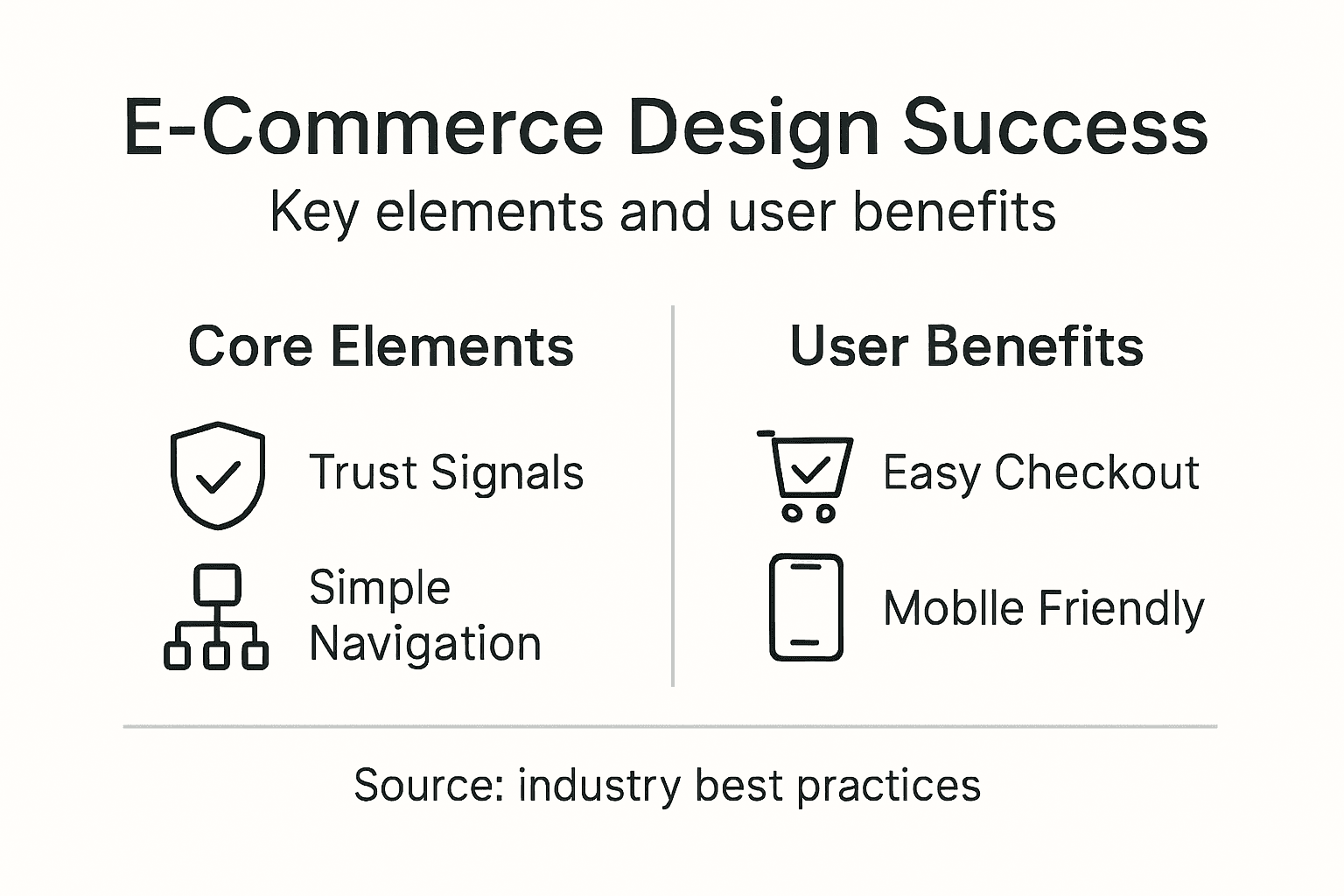
Key UX elements fundamentally transform how customers perceive and interact with online shopping platforms. Trust signals, such as secure payment icons, customer reviews, and transparent policies, play a crucial role in reducing user anxiety and encouraging confident purchasing decisions. These elements work together to create a psychological safety net that reassures potential buyers.

Successful e-commerce experiences are not just about visual appeal but about understanding and anticipating user behavior. This requires deep empathy with customer journeys, identifying potential friction points, and designing intuitive solutions that make online shopping feel natural and effortless. By prioritizing user needs and creating thoughtful, responsive design experiences, brands can significantly improve engagement and conversion rates.
Pro tip: Conduct regular user testing and utilize heatmap analytics to continuously refine your website’s user experience and identify potential improvement areas.
Wix Solutions for Small Business Web Design
Wix offers comprehensive web design solutions specifically tailored for small businesses seeking to establish a powerful online presence. Business solutions and management tools provide small enterprises with robust capabilities to build, manage, and scale their digital platforms efficiently and professionally.
Key Wix solutions for small businesses include:
Wix Stores: Complete e-commerce platform for online selling
Bookings Management: Integrated scheduling and appointment systems
Events Management: Tools for creating and promoting business events
Multi-Device Compatibility: Responsive designs that work across all devices
Customer Engagement Tools: Advanced features for building customer relationships
The platform’s integrated approach eliminates the complexity typically associated with website development. Small business owners can leverage drag-and-drop interfaces, pre-designed templates, and built-in marketing tools that simplify the process of creating a professional online storefront. These solutions remove technical barriers, allowing entrepreneurs to focus on their core business activities while maintaining a sophisticated digital presence.
Wix’s ecosystem goes beyond basic website creation by offering comprehensive business management features. From inventory tracking to customer communication systems, the platform provides small businesses with enterprise-level capabilities at an accessible price point. This democratization of web design technology enables even the smallest ventures to compete effectively in the digital marketplace.
Pro tip: Utilize Wix’s free trial period to thoroughly explore and test different features before committing to a specific business solution.
Risks, Costs, and Common Mistakes to Avoid
Small businesses face numerous potential pitfalls when designing their e-commerce websites, with critical web design mistakes potentially causing significant financial and reputational damage. Understanding these risks is crucial for developing a strategic and effective online presence.
Common web design risks and mistakes include:
Mobile Unresponsiveness: Failing to create mobile-friendly designs
Slow Load Times: Causing user frustration and high bounce rates
Poor Navigation: Creating confusing user pathways
Cluttered Layouts: Overwhelming visitors with excessive information
Inadequate SEO Optimization: Reducing online visibility
Project management challenges can exponentially increase design costs and complexity. Many small businesses underestimate the time, resources, and technical expertise required to create a professional website. Unclear stakeholder roles, misaligned project goals, and unrealistic expectations can transform what should be a straightforward process into a costly and time-consuming endeavor.
Financial risks extend beyond immediate design costs. Poorly designed websites can lead to lost sales, reduced customer trust, and long-term brand damage. A website that appears unprofessional or functions inefficiently can immediately deter potential customers, causing potentially irreversible harm to the business’s online reputation and revenue potential.
Key project risks in e-commerce web design and their impacts:
Project Risk | Potential Impact | Prevention Strategy |
Role confusion | Missed deadlines, scope creep | Define clear roles up front |
Underestimating complexity | Cost overruns, delays | Detailed planning and consultation |
Inadequate testing | Broken features, poor experience | Test on real devices regularly |
Ignoring SEO | Low search traffic, lost sales | Integrate SEO from the start |
Poor mobile performance | High bounce rates, lost users | Prioritize mobile optimization |
Pro tip: Budget for professional consultation and allocate at least 20% of your total project budget for unexpected design challenges and potential revisions.
Elevate Your E-Commerce Success with Expert Web Design Support
The article highlights the critical challenges small businesses face when building e-commerce websites such as mobile unresponsiveness, slow load times, and poor navigation. These issues directly impact user experience and sales potential. If you want your online store to provide seamless, responsive designs and optimized performance that turn visitors into loyal customers you need specialized support from a professional team. At WebCityX, we understand the importance of integrating user-centric design with technical excellence for Wix and Wix Studio sites.

Ready to avoid costly design mistakes and maximize your e-commerce potential? Discover how our website design, SEO, and technical support services can transform your digital storefront today. Visit WebCityX and take the next step toward a powerful responsive website that reliably converts visitors into buyers. Learn more about our tailored website design solutions and start optimizing your online presence now.
Frequently Asked Questions
What are the key components of effective e-commerce web design?
Effective e-commerce web design includes user experience (UX), visual communication, intuitive navigation, performance speed, and mobile responsiveness to create a compelling online shopping environment.
How can responsive design improve e-commerce website performance?
Responsive design optimizes websites for various devices, ensuring a consistent user experience and improving engagement and conversion rates across desktops, tablets, and smartphones.
What common mistakes should small businesses avoid in e-commerce web design?
Small businesses should avoid mistakes like mobile unresponsiveness, slow load times, poor navigation, cluttered layouts, and inadequate SEO optimization to ensure a professional and effective online presence.
Why is user experience critical in e-commerce design?
User experience is crucial in e-commerce design because it directly affects customer engagement, satisfaction, and conversion rates. A seamless and intuitive experience encourages users to complete their purchases with confidence.
Recommended
