_edited.png)
Role of Branding Online – Boosting Business Visibility

Updated: Feb 23

Standing out online can feel challenging when every business in Hungary is vying for the same customers. The difference often comes down to your recognizable, consistent presence across digital channels. With more customers forming first impressions based on your website and social media, your Wix site becomes your digital handshake. This article guides you through building a strong online brand that attracts attention, builds trust, and sets your business apart in a crowded market.
Table of Contents
Key Takeaways
Point | Details |
Online Branding is Essential | It encompasses a business’s digital identity, affecting customer perception and trust through consistent representation across channels. |
Consistency is Key | Maintaining a cohesive visual identity and messaging across all platforms fosters brand recognition and loyalty. |
Engagement Drives Success | Utilizing strategies like social media marketing, content marketing, and email marketing enhances customer interaction and retention. |
Avoid Common Mistakes | Inconsistency across platforms and neglecting the target audience can undermine branding efforts and customer trust. |
Defining Online Branding for Businesses
Online branding is the process of building a recognizable, consistent presence across digital channels to attract and retain customers. For your business, it means far more than just having a logo or social media accounts—it’s the complete experience customers have when they interact with you online.
Think of online branding as your business’s digital personality. When someone lands on your website or sees your social media content, they’re forming opinions about who you are and whether they trust you. That first impression matters.
At its core, online branding involves several interconnected elements:
Brand identity: Your visual style, messaging, and core values that make you recognizable
Digital presence: Active engagement across websites, social media, email, and mobile platforms
Customer engagement: Meaningful interactions that build loyalty and trust
Brand perception: How customers actually view your business based on their experiences
Market positioning: Your unique place in the competitive landscape relative to competitors
For small and medium-sized businesses in Hungary with Wix sites, digital brand communication across platforms plays a critical role in strengthening how people perceive and remember your company. This goes beyond occasional posts—it’s about consistent, strategic communication that reinforces who you are.
Online branding also serves a practical business purpose. A strong online brand increases visibility, helps you stand out from competitors, and makes customers more likely to choose you over alternatives. When your brand feels cohesive and professional across all digital touchpoints, people remember you.
Your online brand is the sum of every interaction a customer has with your business in the digital space—from your website design to your email signature.
Your website acts as the central hub of your online branding efforts. The role your website plays in overall branding directly influences how effectively you communicate your business identity and attract your target audience.
Understanding online branding means recognizing that it’s not static. Your brand evolves as your business grows, market conditions change, and customer preferences shift. The key is maintaining consistency while staying relevant.
Pro tip: Start by defining your brand’s core values, target audience, and unique selling point—then ensure every element of your Wix site (colors, fonts, messaging, images) reflects these consistently across every page.
Key Types of Digital Branding Strategies
Digital branding strategies are the specific tactics you use to build and strengthen your online presence. They work together to create a cohesive brand experience that attracts customers and keeps them coming back.
There’s no single “right” strategy—what works depends on your business type, budget, and where your customers spend their time online. Most successful businesses combine multiple approaches.
Social Media Marketing
Social media is where your customers already spend time. Regular posts, engagement with followers, and consistent messaging build brand awareness and create community around your business.
On platforms like Facebook and Instagram, you can share behind-the-scenes content, customer testimonials, and updates that humanize your brand. This builds trust faster than traditional advertising.
Content Marketing
Content marketing means creating valuable information that attracts people to your business. Blog posts, videos, guides, and infographics answer customer questions and position you as knowledgeable in your field.
When someone finds your helpful content, they start seeing you as a trusted resource. This naturally leads to more inquiries and sales over time.
Email Marketing
Email remains one of the highest-return marketing channels. Regular newsletters keep your brand top-of-mind and allow direct communication with interested customers.
Personalized emails that provide real value—not just sales pitches—strengthen customer loyalty and encourage repeat business.
Consistent Visual Identity and Messaging
Key digital branding strategies including visual consistency across all platforms create recognition and trust. Your colors, fonts, tone of voice, and logo should look and feel the same everywhere.

When customers see your brand across different channels, consistency reinforces who you are. Inconsistency confuses people and weakens your message.
Your Wix site is the perfect place to establish this consistency. Every page should reflect your brand guidelines.
Influencer Partnerships and Online Collaboration
Working with local influencers or complementary businesses expands your reach to new audiences. These partnerships feel authentic and tap into existing trust.
Multi-channel brand communication through partnerships amplifies your visibility without massive ad spending.
The most effective digital branding combines multiple strategies working together—not just one tactic in isolation.
Here’s what works together:
Social media drives traffic to your content
Content marketing builds authority and trust
Email keeps customers engaged between visits
Visual consistency makes everything recognizable
Partnerships extend your reach
For businesses in Hungary, adapting these strategies to local preferences and languages increases effectiveness. Your audience responds better to content that feels locally relevant.
Pro tip: Pick two or three strategies to start—social media plus email, or content marketing plus consistent branding on your Wix site—then master those before expanding to others.
Here’s a quick summary of popular digital branding strategies and their main business benefits:
Strategy | Primary Business Benefit | Typical Channel |
Social Media Marketing | Enhances visibility, builds trust | Facebook, Instagram |
Content Marketing | Establishes expertise, attracts leads | Blog, Video, Guides |
Email Marketing | Drives retention, boosts loyalty | Newsletters, Promotions |
Visual Identity Consistency | Strengthens recognition, promotes reliability | Website, Social Media |
Influencer Partnerships | Extends reach, increases credibility | Instagram, Blogs |
Visual Identity and Brand Consistency Online
Your visual identity is how your brand looks and feels across every digital touchpoint. It’s the combination of colors, fonts, images, logos, and design elements that make people instantly recognize you.
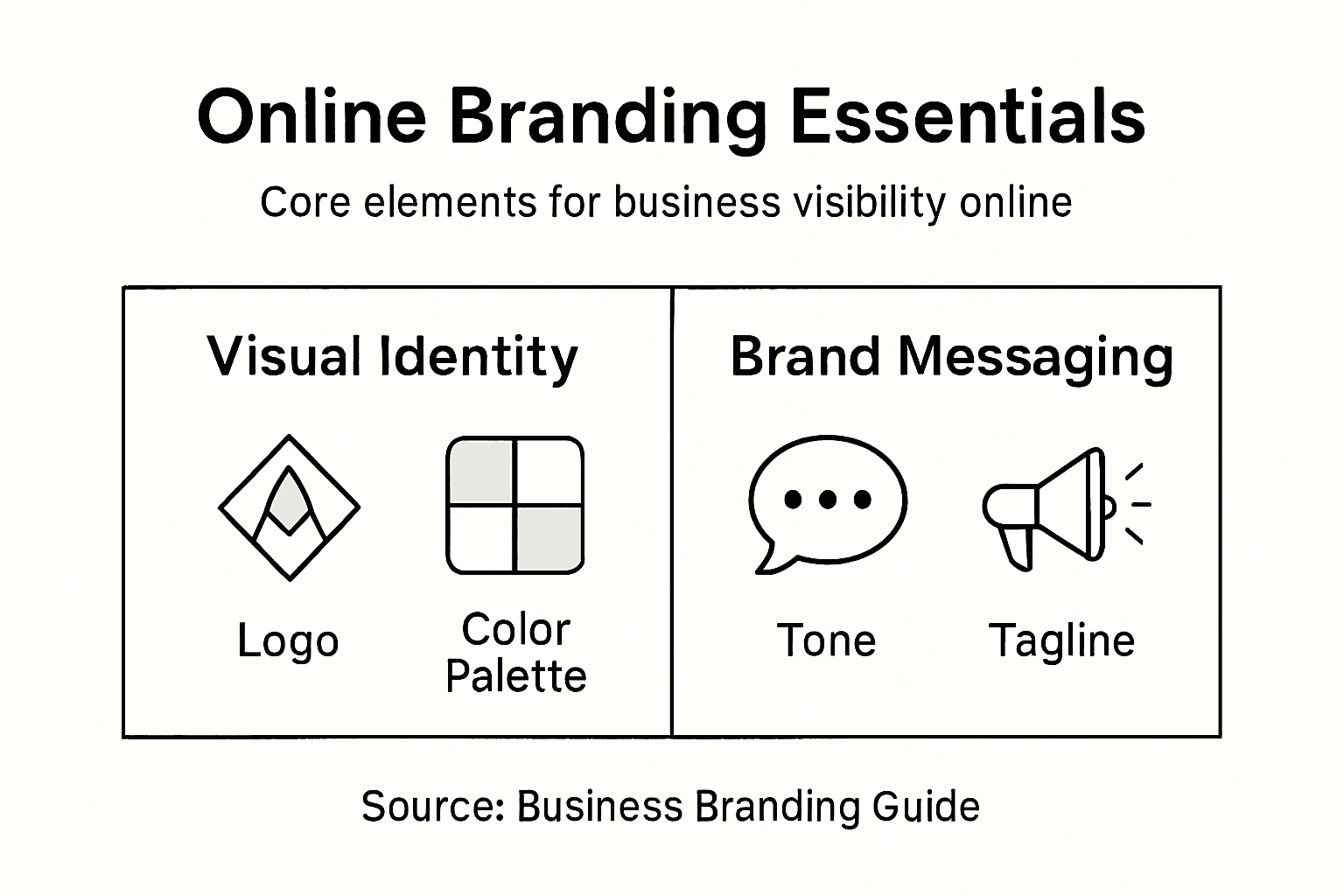
Consistency matters because it builds recognition and trust. When customers see the same visual style everywhere—your website, social media, emails, and ads—your brand becomes memorable and professional.
Inconsistent visuals confuse people. If your Facebook looks completely different from your Wix site, customers wonder if they’re dealing with the same business.
Core Visual Elements
Every strong online brand has these foundation pieces:
Logo: Your primary symbol that appears consistently across all platforms
Color palette: A set of 2-4 main colors plus neutrals for all design work
Typography: Specific fonts for headings, body text, and accents
Photography style: A consistent look and feel for images
Design patterns: Repeated visual elements like borders, icons, or spacing
Imagery tone: Whether your photos feel corporate, casual, warm, or energetic
Think of these as your brand guidelines—the rulebook that keeps everything aligned.
Why Consistency Drives Business Results
Visual identity and consistent branding across channels directly strengthen customer recognition and loyalty. When your brand looks cohesive everywhere, people remember you better and trust you more.
On a practical level, consistency also influences purchasing decisions. Studies show customers perceive consistent brands as more professional and reliable.
For your Wix site specifically, this means every page should reflect your brand guidelines. Headers, buttons, spacing, and colors should feel uniform.
Building Consistency on Your Wix Site
Your website is the hub of your visual identity. Here’s what to focus on:
Use the same logo placement on every page
Apply your color palette to buttons, links, and accents consistently
Stick with the same fonts throughout
Maintain consistent spacing and layout patterns
Use similar image styles and filters
Keep your tone of voice aligned with your visual style
Customers form 94% of their first impressions based on visual design—before they even read your content.
This means your visual consistency is doing heavy lifting before your words even matter. Get it right, and customers trust you immediately.
Maintaining Consistency Across Channels
Your brand appears in multiple places: your Wix site, Facebook, Instagram, email newsletters, business cards, and Google profiles. Each channel should reflect the same visual identity.
Create a simple brand document that outlines your colors (with exact codes), fonts, logo usage, and photography style. This becomes your reference guide for everything.
When you hire help or update your site, you can share this document to ensure consistency.
Pro tip: Export your brand colors as hex codes and keep them in a simple document—then use those exact codes everywhere from your Wix site to social media to ensure perfect visual consistency.
Branding with Wix: Practical Approaches
Wix makes it surprisingly easy to build a strong online brand without needing design or coding skills. The platform offers built-in tools and templates specifically designed to support consistent branding across your entire site.
If you’re running a small or medium-sized business in Hungary, Wix removes barriers that typically slow down branding efforts. You can have a professionally branded site live in days, not months.
Setting Up Your Wix Brand Foundation
Start by establishing your brand settings in Wix. This is where consistency begins:
Choose your primary colors and apply them to buttons, links, and accents
Select and stick with 2-3 fonts for the entire site
Upload your logo and set its placement on every page
Create a consistent header and footer design
Use the same image style throughout (photography filters, backgrounds)
Wix’s design system keeps these choices centralized, so changes ripple across your whole site instantly.
Using Wix Templates for Brand Consistency
Wix templates give you a professional starting point. They’re pre-designed with consistent layouts, spacing, and typography that work together.
Choose a template that matches your brand personality, then customize it with your colors and logo. The template’s structure maintains consistency automatically.
This approach saves months of design work while ensuring your brand looks polished from day one.
Optimizing Your Wix Site for Brand Recognition
Your Wix site is your brand’s home. Make it work harder for you:
Create a clear homepage that communicates who you are immediately
Use consistent page layouts so visitors always know where to find information
Write in a consistent voice—friendly, formal, casual, or professional
Feature customer testimonials that reinforce your brand values
Use calls-to-action that reflect your brand personality
Keep navigation simple and intuitive across all pages
Your Wix site should feel like one cohesive brand experience, not a collection of random pages.
When visitors move from your homepage to your services page to your contact form, everything should feel intentional and aligned.
Connecting Your Wix Site to Social Media
Aligning your website and brand identity together ensures your entire online presence tells the same story. Wix makes it simple to add social media links and embed feeds directly into your site.
Your social profiles should mirror your Wix site’s visual identity. Use the same colors, fonts, and imagery on Facebook, Instagram, and LinkedIn as you do on your website.
This multi-channel consistency is what actually builds recognition and trust with customers.
Compare website and social media branding focus:
Aspect | Website Branding | Social Media Branding |
Control | High, full customization | Platform-limited, less control |
Longevity | Permanent content, accessible anytime | Time-sensitive, posts fade quickly |
Audience Reach | Targeted, visitors looking for info | Broad, casual interactions |
Impact on Trust | Major, seen as professional hub | Supplementary, shows personality |
Maintaining Your Brand Over Time
Your Wix site will evolve as your business grows. Update your content regularly—add new case studies, refresh testimonials, post blog articles—but keep your visual identity stable.
Small updates are fine. Major brand overhauls should happen deliberately, not accidentally through inconsistent edits.
Pro tip: Create a simple Wix style guide document listing your brand colors (with hex codes), approved fonts, logo usage rules, and image guidelines—then share it with anyone who helps maintain your site to ensure consistency never slips.
Common Branding Mistakes to Avoid
Even with the best intentions, small business owners often make branding decisions that undermine their online presence. Recognizing these pitfalls helps you build a stronger brand from the start.
Many of these mistakes come from moving too fast or not thinking strategically about your brand’s long-term impact. The good news is they’re all preventable.
Inconsistency Across Platforms
One of the most damaging mistakes is using different colors, fonts, and logos on different platforms. Your Facebook looks professional, but your Wix site uses completely different branding.
Customers get confused about whether they’re dealing with the same business. This inconsistency erodes trust and makes your brand forgettable.
Always maintain the same visual identity everywhere—your website, social media, email, and business cards should all reflect your brand guidelines.
Ignoring Your Target Audience
Your brand should speak directly to the people you want to attract. If you’re targeting young professionals but your branding feels outdated, they’ll go elsewhere.
Many businesses create brands based on what they think looks good rather than what resonates with their actual customers. This disconnect wastes effort and money.
Before finalizing your brand, ask your target audience what they think. Their feedback matters more than your personal preferences.
Trying to Appeal to Everyone
A brand that tries to please everyone ends up pleasing no one. When you soften your message to be inoffensive to everyone, you become generic and unmemorable.
The most successful brands have a clear point of view and speak directly to a specific group of people. This focus makes you stronger, not weaker.
Accept that some people won’t be your customers—and that’s okay. Your job is to attract the right customers, not all customers.
Neglecting Your Website as Brand Hub
Your website is where your brand lives. Some businesses focus heavily on social media while letting their Wix site become neglected or outdated.
Your website represents your business professionally and gives customers the ability to learn about you on your terms. Neglecting it sends the wrong message.
Invest in keeping your website current, mobile-friendly, and aligned with your brand guidelines.
Changing Your Brand Too Frequently
Brand building takes time. Many businesses panic after a few months without results and completely overhaul their branding.
This constant switching confuses customers and prevents brand recognition from building. You need consistency over months and years to see real results.
Strong brands are built through consistency over time, not quick fixes or constant reinvention.
Give your brand at least 6-12 months before making major changes. Small tweaks are fine, but major overhauls undermine your efforts.
Using Poor Quality Visuals
Low-quality images, amateur logos, or cluttered designs damage your brand’s credibility. Customers judge your professionalism based on your visual presentation.
Invest in decent photography, a professional logo, and clean design. This doesn’t require expensive agencies—Wix offers affordable tools and templates that look polished.
Cheap visuals make even good businesses look unprofessional.
Inconsistent Messaging and Tone
Your brand voice should be consistent across your website, social media, and customer interactions. If your tone shifts from professional to casual to aggressive, customers wonder who you are.
Define how your brand communicates. Are you friendly and approachable? Professional and formal? Adventurous and bold? Stick with it.
Pro tip: Document your branding mistakes before they happen by creating a simple checklist: consistent colors used everywhere, target audience clearly defined, brand not changed in past 6 months, website updated regularly, tone consistent across channels—review it quarterly.
Elevate Your Online Brand to Stand Out and Gain Trust
The challenge you face is clear: building a consistent and memorable online brand that truly connects with your audience and boosts your business visibility. If you struggle with maintaining brand consistency across your Wix site and social media or worry that your current design does not reflect your core values and unique selling points, you are not alone. Strong visual identity, cohesive messaging, and strategic digital branding are the keys to gaining trust and capturing loyal customers.

Transform your brand presence with expert help from a web design agency specializing in modern responsive website design, SEO, and technical support for Wix and Wix Studio sites. At WebCityX, we help small and medium-size businesses in Hungary and worldwide build websites that serve as powerful hubs for online branding. Our team ensures your visual identity and messaging remain consistent and engaging across every page. Discover how the role of branding online can be maximized by partnering with us. Ready to stop losing potential customers to inconsistent presentation? Start your journey toward a cohesive and professional brand today by visiting WebCityX and learn how effortless managing your brand on Wix can be.
Frequently Asked Questions
What is online branding?
Online branding is the process of creating a recognizable and consistent presence for a business across digital channels, aimed at attracting and retaining customers through various elements such as brand identity and customer engagement.
Why is consistent branding important for my business?
Consistent branding builds recognition and trust among customers. When your visual identity and messaging are uniform across platforms, it strengthens the perception of professionalism and reliability, making it easier for customers to remember and choose your business.
How can social media enhance my online branding efforts?
Social media allows you to engage directly with your audience, share valuable content, and humanize your brand. Regular posts and interactions foster community and trust and enhance visibility, helping to solidify your brand identity in the minds of consumers.
What role does a website play in my business’s online branding?
Your website serves as the central hub for your online branding efforts. It communicates your business identity through design and content, influencing how effectively you attract and engage your target audience.
Recommended
