_edited.png)
Role of Small Business Websites: Boosting Growth and Visibility


Standing out online can feel tough when visitors leave your site for a competitor after just a few clicks. For small and medium-sized business owners in Hungary, a well-designed website is much more than a digital business card. A strong online presence acts as your best salesperson, open around the clock and ready to build trust with every visitor. This guide shows you how effective website design and smart SEO strategies can transform your Wix site into a powerful tool for customer engagement and business growth.
Table of Contents
Key Takeaways
Point | Details |
Importance of Websites | Small business websites are essential for connecting with customers and establishing a digital presence. They serve as marketing hubs and enhance brand credibility. |
Website Types | Different types of websites, such as e-commerce and informational, serve unique business functions and target different audiences. Choosing the right type aligns with business objectives. |
Essential Features | Engaging websites prioritize user experience with intuitive navigation, compelling content, and trust-building elements to foster customer interaction. |
SEO Strategies | Effective SEO involves technical optimization and high-quality content to improve digital visibility and meet user needs, essential for standing out online. |
Defining Small Business Websites and Their Value
Small business websites represent critical digital platforms that transform how entrepreneurs connect with potential customers and establish their market presence. These virtual storefronts are no longer optional luxuries but essential tools for business survival and growth in today’s technology-driven marketplace. Small and medium enterprises worldwide rely on web presence to drive economic opportunity and enhance visibility.
Websites serve multiple strategic functions for small businesses beyond simple information sharing:
Digital marketing hub
Customer engagement platform
24/7 operational sales channel
Brand credibility builder
Cost-effective communication tool
Modern small business websites must go beyond basic contact information. They represent dynamic interfaces that communicate brand personality, showcase products/services, and provide seamless user experiences. Effective website design directly influences purchasing decisions and establishes professional legitimacy.
Successful small business websites prioritize user experience, mobile responsiveness, clear navigation, and compelling visual storytelling. They transform digital real estate into powerful marketing assets that can significantly amplify business growth potential.
Pro tip: Invest in professional website design that reflects your unique brand identity and addresses specific customer needs.
Types of Business Websites for SMEs
Small and medium enterprises require diverse website strategies to effectively communicate their unique business offerings and engage potential customers. Business websites span multiple categories designed to address specific operational and marketing objectives, each serving distinct purposes in the digital marketplace.
Key types of business websites for SMEs include:
Informational Websites
Provide company overview
Share mission and values
Display contact details
E-commerce Websites
Enable direct online sales
Feature product catalogs
Integrate secure payment systems
Portfolio Websites
Showcase professional work
Highlight past projects
Demonstrate expertise
Landing Page Websites
Focus on specific marketing campaigns
Drive targeted conversions
Collect customer information
Each website type requires strategic design considerations tailored to the specific business model and target audience. Professional websites must balance aesthetic appeal with functional user experience, ensuring seamless navigation and clear communication of brand identity.
Successful SME websites go beyond basic digital presence by creating interactive platforms that build trust, demonstrate credibility, and provide genuine value to potential customers. Strategic website selection depends on understanding business goals, customer expectations, and industry-specific communication requirements.
Here is a summary of website types and their primary business advantages:
Website Type | Core Purpose | Typical Audience | Major Business Benefit |
Informational | Communicate company details | General consumers | Builds credibility and trust |
E-commerce | Sell products/services online | Interested shoppers | Expands sales opportunities |
Portfolio | Display professional achievements | Potential clients | Demonstrates expertise visually |
Landing Page | Drive specific campaign conversions | Targeted prospects | Captures leads efficiently |
Pro tip: Choose a website type that directly aligns with your primary business objectives and target audience needs.
Essential Features for Engaging Visitors
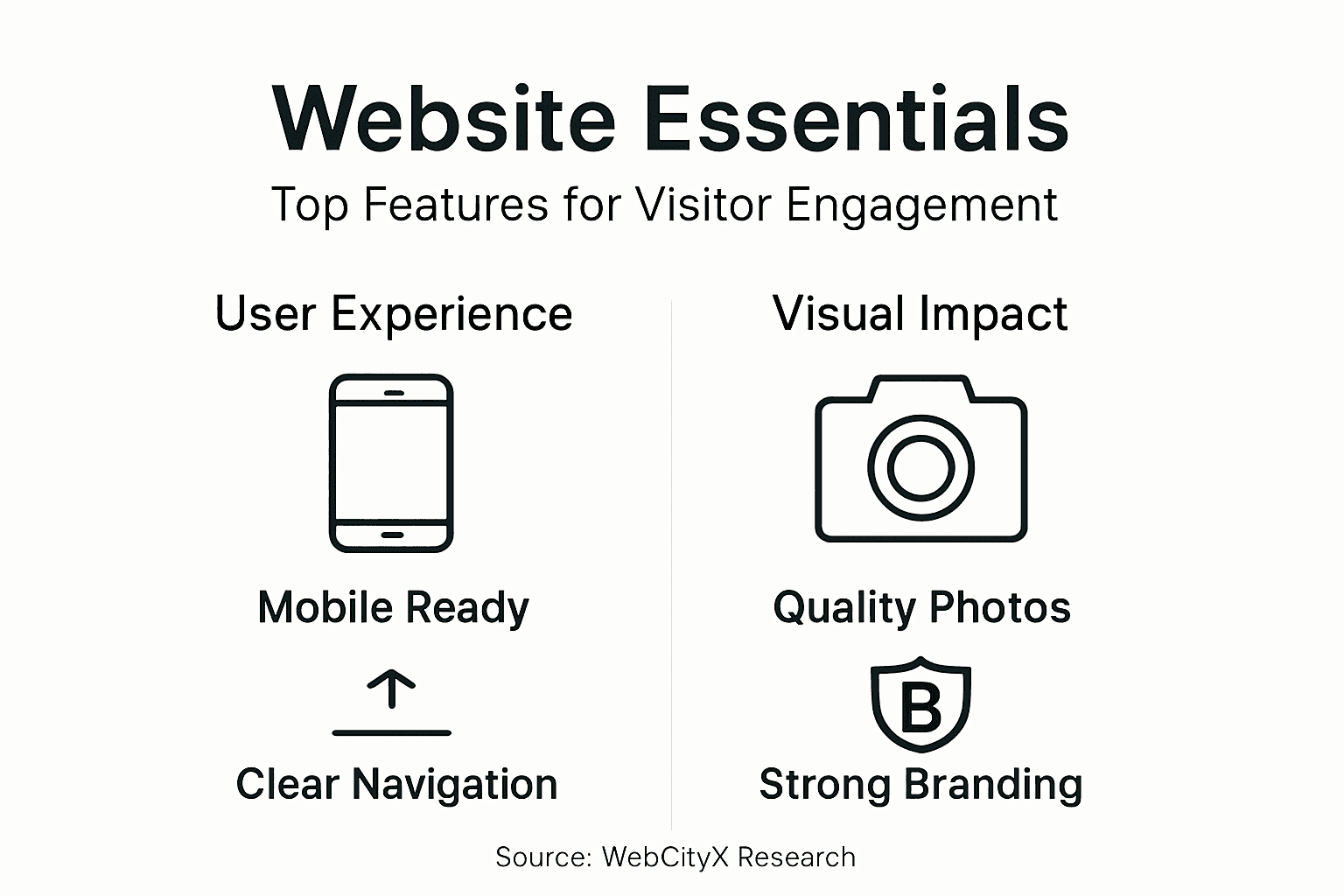
Effective business websites require strategic design elements that transform passive browsing into active customer engagement. Small business websites must create compelling digital experiences that immediately communicate value, build trust, and encourage visitor interaction.
Key engagement features include:
Visual Design Elements
Professional, clean layout
High-quality imagery
Consistent brand colors
Content Strategy
Clear value proposition
Authentic storytelling
Customer-focused messaging
Functional Components
Intuitive navigation
Mobile responsiveness
Fast loading speeds
Trust-Building Features
Customer testimonials
Professional credentials
Transparent contact information
Website performance relies on creating seamless user experiences that anticipate and fulfill visitor expectations. This means designing interfaces that are visually appealing, functionally intuitive, and strategically structured to guide potential customers through their decision-making journey.

The most successful small business websites understand that engagement is about creating emotional connections. Beyond technical features, websites must communicate authenticity, demonstrate expertise, and provide genuine value that distinguishes the business from competitors.
The table below highlights how essential website features impact visitor engagement:
Feature Category | Key Impact on Visitors | Improves Business Outcomes |
Visual Design | Enhances brand perception | Increases trust and retention |
Content Strategy | Clarifies business value | Drives meaningful conversions |
Functional Components | Facilitates smooth navigation | Reduces bounce rates |
Trust Builders | Builds customer confidence | Boosts inquiries and sales |
Pro tip: Regularly analyze your website’s user experience through heat mapping and visitor behavior tools to continuously refine engagement strategies.
SEO and Online Visibility Strategies
SEO strategies for small businesses require a sophisticated approach that goes beyond basic keyword optimization. Digital visibility demands a comprehensive strategy that combines technical expertise, content quality, and strategic targeting to help businesses stand out in competitive online landscapes.
Key SEO strategies include:
Technical Optimization
Mobile-responsive design
Fast page loading speeds
Clean website architecture
Content Development
Targeted, high-quality content
Consistent publishing schedule
Keyword-focused writing
Local Search Enhancement
Google Business Profile optimization
Local keyword targeting
Location-specific content creation
Digital Public Relations
Backlink acquisition
Social media integration
Online reputation management
Successful SEO requires ongoing adaptation and strategic thinking. Small businesses must continuously analyze performance metrics, understand audience search behaviors, and refine their digital strategies to maintain and improve search engine rankings.
The most effective SEO approaches prioritize user experience and genuine value creation. This means developing content that truly addresses user needs, provides meaningful insights, and demonstrates authentic expertise in the business’s specific domain.
Pro tip: Invest in professional SEO tools that provide comprehensive analytics and actionable insights for continuous website optimization.
Common Website Mistakes and How to Avoid Them
Business website mistakes can significantly hinder online performance and customer engagement. Many small businesses unknowingly create digital barriers that prevent potential customers from connecting with their brand, ultimately limiting growth and visibility.
Common website pitfalls include:
Design and User Experience Issues
Cluttered, confusing layouts
Non-responsive mobile design
Overwhelming color schemes
Content-Related Problems
Outdated or irrelevant information
Lack of clear value proposition
Poor quality or inconsistent messaging
Technical Performance Challenges
Slow loading speeds
Broken links and navigation errors
Poor search engine optimization
Conversion Blocking Elements
Missing or hidden contact information
Complex or lengthy contact forms
Lack of clear call-to-action buttons
Successful websites require continuous evaluation and refinement. Small businesses must approach their online presence as a dynamic platform that evolves with customer needs, technological advancements, and market trends.
Effective website management goes beyond avoiding mistakes. It demands a proactive approach that prioritizes user experience, clear communication, and strategic design that reflects the unique value of the business.
Pro tip: Conduct quarterly website audits to identify and address potential performance and user experience issues before they impact your business.
Elevate Your Small Business Website for Real Growth
Many small business owners struggle with creating a website that truly engages visitors, improves visibility, and drives sales. This article highlights common challenges like poor user experience, lack of mobile responsiveness, and ineffective SEO strategies that block online growth. If you want a website that acts as a powerful digital marketing hub and builds trust with your audience you need a modern, responsive design tailored to your unique brand and business goals.
At WebCityX, we specialize in designing and optimizing Wix and Wix Studio websites for small and medium businesses in Hungary and worldwide. Our expert team ensures your website features clear navigation, fast loading speeds, and strategic SEO to enhance online presence and attract more customers.
Unlock your website’s full potential today with professional support that transforms visitors into loyal customers.

Discover how our solutions can solve the exact challenges outlined in this article and boost your business growth now. Visit our landing page or explore our web design services to take the first step toward a website that truly works for you.
Frequently Asked Questions
What are the key benefits of having a small business website?
A small business website enhances visibility, builds brand credibility, serves as a 24/7 sales channel, facilitates customer engagement, and acts as a cost-effective marketing tool.
What types of websites should small businesses consider?
Small businesses can consider various types of websites, such as informational websites for brand awareness, e-commerce sites for online sales, portfolio websites to showcase work, and landing pages to drive specific marketing campaigns.
What essential features should be included on a small business website?
Essential features include a clean visual design, clear value propositions, intuitive navigation, mobile responsiveness, fast loading speeds, customer testimonials, and transparent contact information to enhance user engagement.
How can small businesses improve their online visibility through SEO?
Small businesses can improve online visibility by focusing on technical optimization, creating high-quality targeted content, enhancing local search presence, and managing digital public relations through backlink acquisition and social media integration.
Recommended
