_edited.png)
Role of Web Design: Boosting Engagement and SEO


Building a website on Wix can be exciting, yet many small business owners in Hungary find that standing out online means more than just attractive visuals. As modern web design evolves with technologies like HTML5 and CSS3, the right approach blends visual appeal with user-focused layouts and performance. You will discover how design choices directly influence engagement and search rankings, helping your business website attract and retain customers more effectively.
Table of Contents
Key Takeaways
Point | Details |
User-Centered Design is Essential | Focus on creating intuitive experiences that prioritize user needs and interactions. |
Responsive and Adaptive Layouts are a Must | Ensure your website performs well across all devices to enhance user engagement and SEO rankings. |
SEO and Design are Interconnected | Optimize design elements like navigation and load speed to improve search rankings and user satisfaction. |
Invest in Quality Design | Prioritize professional web services to avoid common pitfalls that can lead to higher costs and poor user experiences. |
What Defines Modern Web Design Today
Modern web design has transformed dramatically, evolving from static pages to dynamic, interactive experiences that prioritize user engagement and seamless functionality. Advanced web technologies now enable designers to create responsive, adaptive interfaces that look stunning across every device and screen size.
The core principles of contemporary web design center around several key characteristics:
User-Centered Approach: Designing with the end-user’s experience as the primary consideration
Responsive Layouts: Ensuring websites adapt perfectly to smartphones, tablets, and desktops
Minimalist Aesthetics: Creating clean, uncluttered interfaces that guide user attention
Performance Optimization: Developing fast-loading pages that maintain visual quality
HTML5 and CSS3 have been revolutionary in enabling more sophisticated design techniques. These technologies introduce semantic elements that improve both visual presentation and underlying code structure, allowing designers to create more meaningful and accessible web experiences.
Today’s web design isn’t just about looking good—it’s about creating intuitive, engaging digital environments that solve user problems efficiently. Successful designs seamlessly blend aesthetic appeal with functional clarity, using visual hierarchies, strategic color schemes, and thoughtful typography to communicate effectively.
Pro tip: Test your website design across multiple devices and screen sizes to ensure a truly responsive user experience.
Key Web Design Types and Layouts
Web design has evolved into a sophisticated discipline with multiple layout approaches tailored to different digital experiences. Website design types now encompass a range of strategic approaches that prioritize user interaction, visual appeal, and functional performance.
The primary web design layout types include:
Static Layouts: Fixed-width designs with consistent pixel measurements
Fluid Layouts: Flexible designs using relative units that adapt to screen width
Responsive Layouts: Dynamic designs that adjust seamlessly across devices
Grid Layouts: Structured designs using columns and rows for organized content
Asymmetrical Layouts: Creative designs utilizing visual weight and unique element positioning
Responsive Design has become particularly critical in modern web development. These layouts use flexible grids, media queries, and adaptive images to ensure websites look perfect on smartphones, tablets, and desktop screens. The goal is creating a consistent user experience regardless of device specifications.
Modern web design goes beyond visual aesthetics. Website layout strategies now integrate complex considerations like user behavior, content hierarchy, and interaction design. Successful layouts guide users intuitively, highlight key information, and create engaging digital experiences that solve specific user needs.
Pro tip: Always prototype and test your web design across multiple devices to ensure seamless responsiveness and optimal user experience.
How Design Impacts SEO Performance
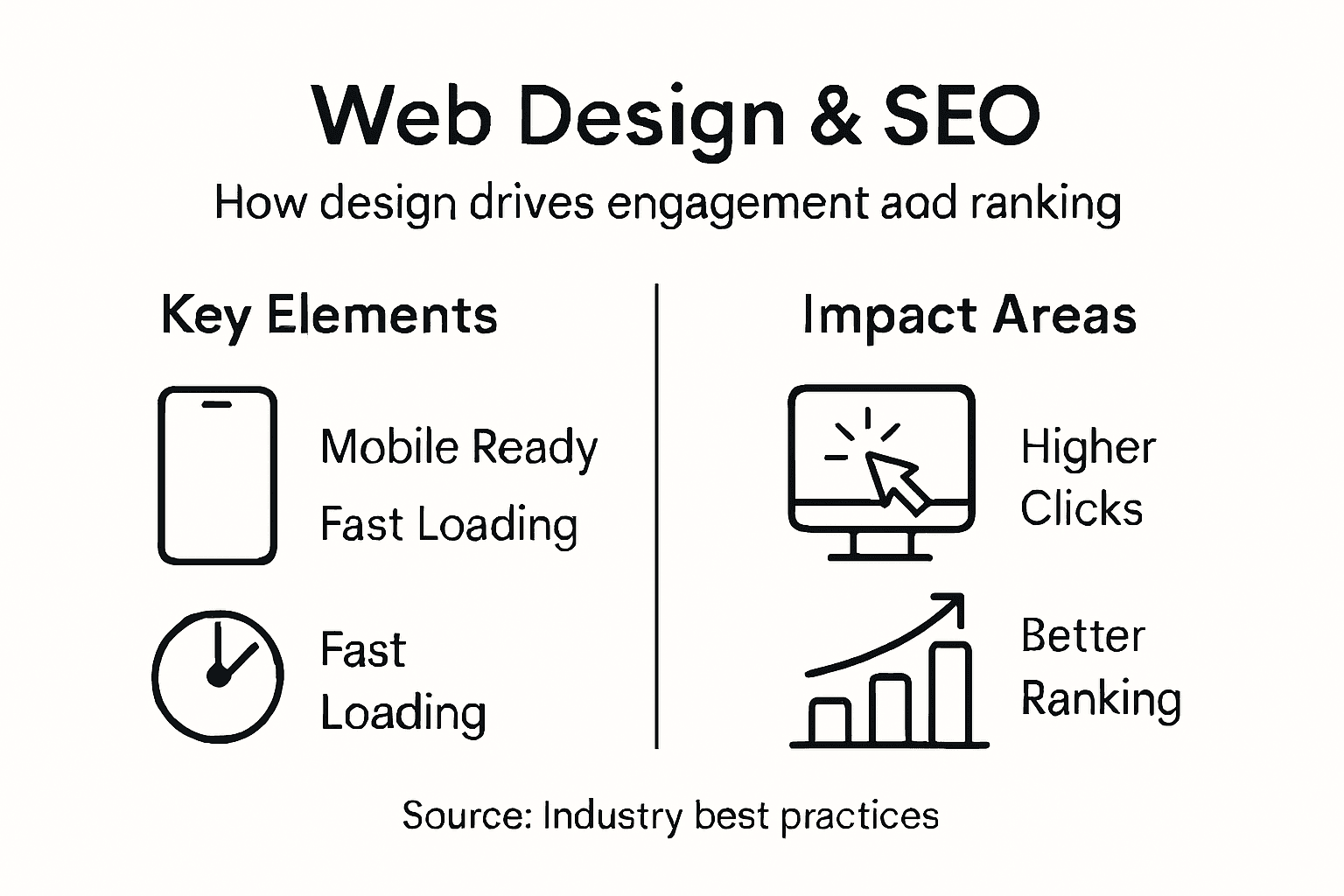
SEO and web design are now inseparable, with search engines prioritizing user experience as a critical ranking factor. Modern websites must balance technical optimization with engaging, intuitive design to achieve high search rankings and user engagement.
Key design elements that directly impact SEO performance include:
Mobile Responsiveness: Ensuring seamless display across all device types
Page Load Speed: Optimizing design for rapid content delivery
Clean Navigation: Creating intuitive site structures that help users and search engines
Visual Hierarchy: Guiding user attention to most important content
Accessible Design: Making websites usable for all visitors, including those with disabilities
Search engines like Google have sophisticated algorithms that assess not just content, but how users interact with a website. A well-designed site reduces bounce rates, increases time on page, and signals quality to search algorithms. This means visual appeal and functional design are no longer just aesthetic choices—they’re critical SEO strategies.

Technical design elements such as semantic HTML, proper heading structures, and fast-loading images directly contribute to search engine rankings. Websites that prioritize user experience through thoughtful design will consistently outperform competitors who view design as an afterthought.
Here’s a summary of how major web design choices impact SEO performance:
Design Choice | SEO Benefit | Potential Risk |
Mobile Responsiveness | Higher rankings, wide reach | Excludes mobile users if absent |
Fast Page Load | Improves crawl rates, ranking | High bounce from slow sites |
Clean Navigation | Boosts indexability | User confusion if cluttered |
Proper Semantic HTML | Enhances content relevance | Lower visibility if missing |
Accessible Design | Increases audience, compliance | Alienates some users if ignored |
Pro tip: Regularly audit your website design using Google’s PageSpeed Insights to identify and resolve performance issues that could impact SEO.
Driving User Engagement Through Usability
User interface design is the critical foundation for creating websites that capture and maintain user attention. Modern digital experiences demand more than just aesthetic appeal—they require intuitive, responsive, and emotionally connected interactions that make users feel understood and valued.
Key elements of high-engagement usability include:
Intuitive Navigation: Clear, logical site structures that minimize user confusion
Responsive Interactions: Immediate, smooth feedback for every user action
Visual Clarity: Clean design that guides users’ attention effortlessly
Personalization: Adaptive experiences that feel tailored to individual needs
Emotional Design: Creating interfaces that evoke positive user feelings
Successful usability goes beyond functional requirements. It involves understanding user psychology, anticipating needs, and creating digital environments that feel natural and effortless. When users can accomplish their goals quickly and enjoyably, they’re more likely to return and recommend the website to others.
Technology has transformed user expectations, making seamless digital experiences the baseline for engagement. Websites that fail to provide smooth, intuitive interactions risk losing users within seconds. By prioritizing user-centered design principles, businesses can create digital experiences that not only meet but exceed user expectations.
Pro tip: Conduct regular user testing and gather feedback to continuously refine your website’s usability and engagement strategies.
Common Mistakes and Cost Considerations
Web design investments can quickly spiral out of control without careful planning and strategic decision-making. Small businesses and marketing managers must understand the potential pitfalls that can transform a straightforward web design project into an expensive, time-consuming endeavor.
Common web design mistakes that drive up costs include:
Overcomplicating Design: Adding unnecessary features that confuse users
Neglecting Mobile Responsiveness: Creating designs that don’t work across devices
Inconsistent Branding: Failing to maintain visual and messaging consistency
Poor Performance Optimization: Designing heavy, slow-loading pages
Ignoring User Feedback: Developing without real user testing and input
Budget considerations for web design require a nuanced approach. While it might be tempting to cut corners, investing in quality design pays long-term dividends. Professional design services typically range from $1,500 to $5,000 for small business websites, with ongoing maintenance costs between $500-$1,000 annually. Custom features and complex functionality can push these numbers significantly higher.
Understanding the true cost of web design involves more than just the initial development price. Businesses must factor in potential revenue loss from poor user experience, decreased search engine rankings, and reduced customer trust. A well-designed website is an investment in your brand’s digital reputation and customer engagement strategy.
Pro tip: Always request detailed project scoping and get multiple quotes to understand the full range of potential web design costs before committing to a specific approach.
Comparing Alternatives and Future Trends
Web design trends are rapidly evolving, pushing businesses to reconsider traditional digital strategies. The landscape now demands innovative approaches that blend cutting-edge technology with user-centric design principles, creating more intelligent and responsive digital experiences.
Key emerging alternatives and trends include:
AI-Driven Personalization: Real-time content adaptation
Immersive 3D Visuals: Enhanced interactive experiences
Micro-Interactions: Subtle animated feedback mechanisms
Sustainable Design Practices: Environmentally conscious web development
Voice User Interfaces: Integration of conversational design elements
Traditional web design platforms are being challenged by more flexible, modular solutions that offer greater customization and performance. No-code and low-code platforms are democratizing web design, allowing businesses with limited technical resources to create sophisticated digital experiences. These tools reduce development costs and accelerate time-to-market while maintaining high design standards.
The table below compares traditional web design platforms with emerging no-code and low-code solutions:
Feature | Traditional Platforms | No-Code/Low-Code Solutions |
Customization Level | Highly customizable | Modular, less granular |
Development Speed | Slower, manual coding | Accelerated, visual tools |
Required Skills | Coding expertise needed | Minimal coding knowledge |
Typical Cost | Higher, ongoing dev fees | Lower initial investment |
The future of web design will prioritize intelligent, adaptive experiences that anticipate user needs. Technologies like machine learning, augmented reality, and advanced personalization algorithms are transforming websites from static information repositories to dynamic, interactive platforms that respond and evolve in real-time.
Pro tip: Invest in continuous learning and stay updated on emerging web design technologies to remain competitive in the rapidly changing digital landscape.
Elevate Your Website’s Engagement and SEO with Expert Web Design Solutions
The crucial challenge highlighted in the article is creating a website that not only captivates users with intuitive, responsive design but also boosts SEO performance through technical optimization and clean navigation. You understand the importance of mobile responsiveness, fast load times, and user-centered layouts to reduce bounce rates and improve rankings. Achieving this balance requires specialized skills, especially when working within platforms like Wix or Wix Studio.
At WebCityX, we specialize in tailoring website design, SEO, and technical support specifically for Wix and Wix Studio sites to ensure your digital presence stands out. Our approach addresses your pain points including maintaining a responsive layout, optimizing page speed, and implementing accessible design—all vital concepts discussed in the article. We transform your website into an engaging and search-friendly platform that your audiences will trust and return to.
Looking to enhance your website’s usability and climb search rankings today

Explore our comprehensive website design services crafted to boost user engagement and improve SEO metrics. Act now to partner with experts who understand both the artistry and technical demands of modern web design. Visit WebCityX to start revitalizing your site with proven strategies that deliver measurable results.
Frequently Asked Questions
How does web design impact user engagement?
Web design plays a crucial role in user engagement by ensuring intuitive navigation, responsive interactions, and visual clarity. A well-designed website creates a seamless experience that encourages users to explore, ultimately increasing their likelihood of returning.
What key elements of web design affect SEO performance?
Key elements that influence SEO performance include mobile responsiveness, page load speed, clean navigation, visual hierarchy, and accessible design. These factors help improve user engagement and signal quality to search engines, driving higher rankings.
What are the common mistakes to avoid in web design?
Common mistakes to avoid include overcomplicating design elements, neglecting mobile responsiveness, maintaining inconsistent branding, failing to optimize performance, and ignoring user feedback. These mistakes can lead to increased costs and diminished user experience.
What are the latest trends in web design?
Current trends in web design include AI-driven personalization, immersive 3D visuals, micro-interactions, sustainable design practices, and voice user interfaces. These innovations aim to create more engaging, responsive, and user-centered digital experiences.
Recommended
