
Web Design Trends 2026: Enhancing Impact With Wix
- Ekaterina WebcityX

- Feb 6
- 6 min read

Staying ahead in digital design means confronting constant change and rising user expectations. For web designers and digital marketers, the need to blend ultra-fast performance, adaptive intelligence, and emotionally engaging aesthetics is reshaping how Wix and Wix Studio projects are planned. The push towards immersive digital environments and AI-driven interfaces promises not only more dynamic user experiences but greater business impact for those who harness these emerging trends.
Table of Contents
Key Takeaways
Point | Details |
Emphasize Speed and Performance | Integrate architectures like Jamstack to enhance site loading times and improve user experience. |
Adopt AI and Personalization | Leverage AI for real-time user interface adaptation to create more personalized digital experiences. |
Focus on User-Centric Design | Prioritize creating immersive, emotionally engaging environments that respond to user needs. |
Beware of Design Pitfalls | Ensure new trends do not compromise site performance or user accessibility; conduct user testing regularly. |
Defining Web Design Trends For 2026
Web design in 2026 represents a radical transformation driven by technological innovation and user experience priorities. Emerging web development trends are reshaping how designers approach digital interfaces, emphasizing performance, accessibility, and seamless interactions.
The landscape of web design is rapidly evolving, with several critical trends emerging:
Speed Optimization: Ultra-fast loading times using architectures like Jamstack
Advanced Performance: WebAssembly enabling near-native browser experiences
Design Systems: Modular, scalable interface frameworks
Intelligent Interfaces: AI-powered personalization and adaptive layouts
Architectural innovations are driving significant changes. Modern web design now prioritizes technical efficiency alongside aesthetic appeal. Designers must balance complex technological requirements with intuitive, emotionally resonant user experiences.
User interface design is becoming increasingly sophisticated, moving beyond visual aesthetics to create deeply immersive digital environments. Interfaces are no longer just about looking good - they must anticipate user needs, provide seamless navigation, and create meaningful interactions.
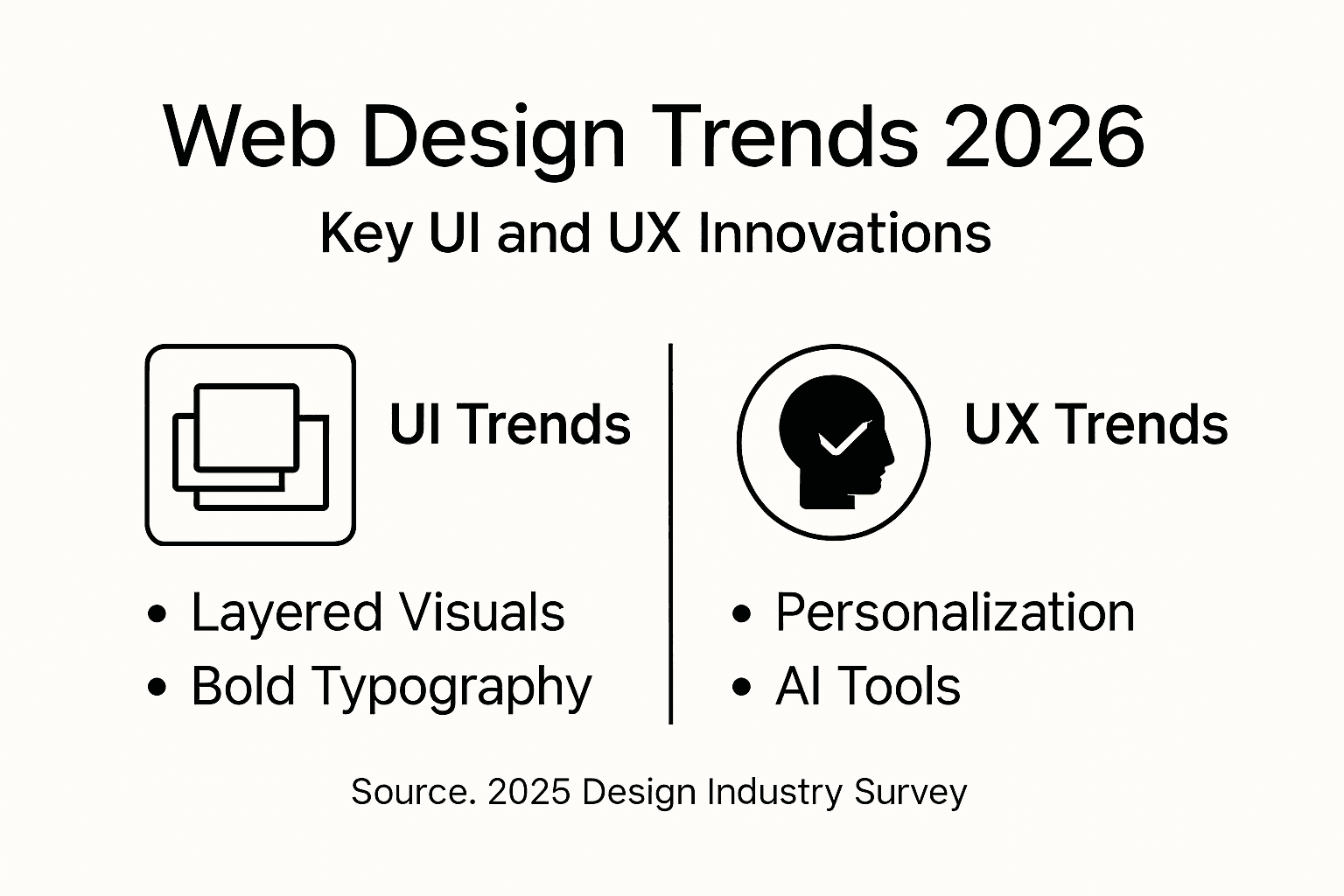
Pro tip: Invest in learning utility-first CSS frameworks and modular design systems to stay ahead of emerging web design trends.
Here’s how leading 2026 web design trends impact business value:
Trend Area | Example Application | Business Benefit |
Speed Optimization | Jamstack architecture | Higher conversion rates |
Modular Design Systems | Component libraries | Faster development cycles |
AI-Powered Personalization | Adaptive content delivery | Improved user retention |
Immersive Interfaces | Layered visuals and gestures | Enhanced brand engagement |
Emerging Aesthetic And UX Innovations
Web design in 2026 is undergoing a profound transformation, with multimodal interface design reshaping how users interact with digital platforms. The future of user experience transcends traditional visual interfaces, integrating voice, text, gestures, and sophisticated AI-driven interactions.
Key aesthetic and UX innovations emerging in 2026 include:
Sensory-Rich Design: Interfaces that engage multiple human perceptions
Adaptive Intelligence: AI-powered personalization with ethical boundaries
Emotional Connectivity: Designs that create meaningful user experiences
Dynamic Interaction: Interfaces that respond intuitively to user behavior
The aesthetic landscape is moving toward more organic, human-centered approaches. Digital experiences are becoming less about technical perfection and more about creating emotional resonance. Designers are crafting interfaces that feel alive, responsive, and deeply connected to human experience.

Visual design trends are embracing complexity and humanity. Expect to see exaggerated typography, immersive layered visuals, and designs that blend realistic textures with surreal elements. These approaches reflect a broader trend of making digital interfaces feel more authentic and emotionally engaging.
Pro tip: Develop skills in AI integration and multi-sensory design to stay competitive in the rapidly evolving web design landscape.
This table summarizes key differences between traditional web design and 2026 innovations:
Aspect | Traditional Approach | 2026 Approach |
Personalization | Manual user segmentation | Real-time AI-driven adaptation |
Interactivity | Click-based navigation | Multimodal, gesture & voice |
Aesthetics | Flat, minimal layouts | Sensory-rich, organic visuals |
Automation | Manual coding/design | Automated AI content creation |
AI Integration And Automation In Web Design
Web design is experiencing a radical transformation through intelligent automation technologies, fundamentally reshaping how digital interfaces are conceived, developed, and optimized. AI is no longer a futuristic concept but a practical tool revolutionizing the design process from conception to implementation.
Key AI-driven innovations in web design include:
Personalized User Experiences: Real-time interface adaptation
Automated Design Generation: AI-powered layout and element creation
Predictive User Behavior Analysis: Intelligent interaction modeling
Dynamic Content Optimization: Contextual interface adjustments
The automation landscape introduces sophisticated machine learning algorithms that can analyze user interactions, predict design preferences, and generate dynamic, responsive interfaces. These technologies enable designers to move beyond static templates, creating living, breathing digital experiences that evolve with user needs.
AI integration represents more than technological advancement - it’s a paradigm shift in design philosophy. Web designers are transitioning from manual creators to strategic directors, guiding AI systems that can generate, test, and refine interfaces with unprecedented speed and precision. This approach dramatically reduces development time while increasing personalization and user engagement.
Pro tip: Invest in learning prompt engineering and AI design tools to stay ahead of the rapidly evolving web design automation landscape.
Personalization And Interactivity On Wix Studio
Wix Studio is revolutionizing web design by enabling advanced personalization strategies that transform static websites into dynamic, adaptive digital experiences. The platform empowers designers to create interfaces that respond intelligently to individual user preferences and behaviors.
Key personalization features in Wix Studio include:
Dynamic Content Adaptation: Real-time interface modifications
User Behavior Tracking: Intelligent interaction mapping
Customizable User Journeys: Tailored navigation experiences
Contextual Element Rendering: Personalized content display
Interactivity goes beyond simple point-and-click interactions. Sophisticated user engagement mechanisms allow websites to become living, breathing entities that learn and evolve with each user interaction. Designers can now create interfaces that feel intuitively connected to individual user needs and preferences.
The future of web design lies in creating experiences that feel uniquely personal. Wix Studio enables designers to move beyond one-size-fits-all approaches, developing digital platforms that adapt, respond, and communicate with users in increasingly nuanced and meaningful ways.
Pro tip: Master Wix Studio’s advanced personalization tools by experimenting with dynamic content blocks and user behavior tracking features.
Common Pitfalls When Applying New Trends
Web design professionals must be cautious when implementing emerging design trends to avoid compromising user experience and website performance. Understanding potential pitfalls is crucial for maintaining a balance between innovative design and functional usability.
Key design trend implementation risks include:
Performance Overload: Excessive visual effects degrading site speed
Accessibility Challenges: Complex design elements hindering user navigation
Over-Personalization: AI-driven customization eroding user privacy
Design Consistency: Sacrificing brand identity for trend adoption
The most significant danger lies in blindly following design trends without considering their practical implications. Technological novelty should never come at the expense of core user experience principles. Designers must critically evaluate each trend’s potential impact on website functionality, loading times, and user engagement.
Ethical considerations are paramount when integrating cutting-edge design elements. Modern web design requires a nuanced approach that balances aesthetic innovation with user-centric functionality. This means carefully selecting trend implementations that genuinely enhance rather than complicate the user journey.
Pro tip: Always conduct user testing and performance audits before fully implementing new design trends to ensure they truly improve rather than compromise your website’s effectiveness.
Unlock the Full Potential of Web Design Trends with Expert Wix Studio Support
The 2026 wave of web design innovations calls for embracing AI-powered personalization, immersive interfaces, and seamless automation. Yet these exciting advances come with challenges like balancing dynamic content with site speed and maintaining ethical user experiences. If you want to overcome the pitfalls of applying new trends without compromising performance or brand identity Wix Studio offers powerful tools that need expert guidance to make the most out of them.

Discover how our dedicated web design agency specializes in delivering tailored solutions for Wix and Wix Studio platforms. With deep expertise in website design and SEO that amplifies intelligent automation, we help you build visually stunning, fast-loading, and deeply personalized websites that engage users on every level. Don’t wait to elevate your site with the latest 2026 web design trends. Take the next step toward transformational digital experiences today by visiting WebCityX and unlocking proactive support for your Wix Studio projects.
Frequently Asked Questions
What are the key web design trends for 2026?
The key trends for 2026 include speed optimization through architectures like Jamstack, AI-powered personalization, modular design systems, and immersive interfaces that respond intuitively to user behavior.
How does AI integration impact web design?
AI integration allows for personalized user experiences, automated design generation, and predictive user behavior analysis, enabling designers to create dynamic and responsive interfaces that evolve with user interactions.
How can Wix Studio enhance personalization in web design?
Wix Studio offers advanced personalization features such as dynamic content adaptation, user behavior tracking, and customizable user journeys, allowing designers to create unique interfaces that cater to individual user preferences.
What are common pitfalls to avoid when implementing new web design trends?
Common pitfalls include performance overload from excessive visual effects, accessibility challenges with complex designs, over-personalization that may infringe on privacy, and sacrificing design consistency for trend adoption.
Recommended

Comments